- by foxnews
- 06 May 2026
Fragile 'underwater museum' of ancient shipwrecks discovered beneath busy sea corridor
Spanning centuries, more than 100 historic shipwrecks have been uncovered on the seafloor of the Bay of Gibraltar by researchers with Project Herakles in Spain.
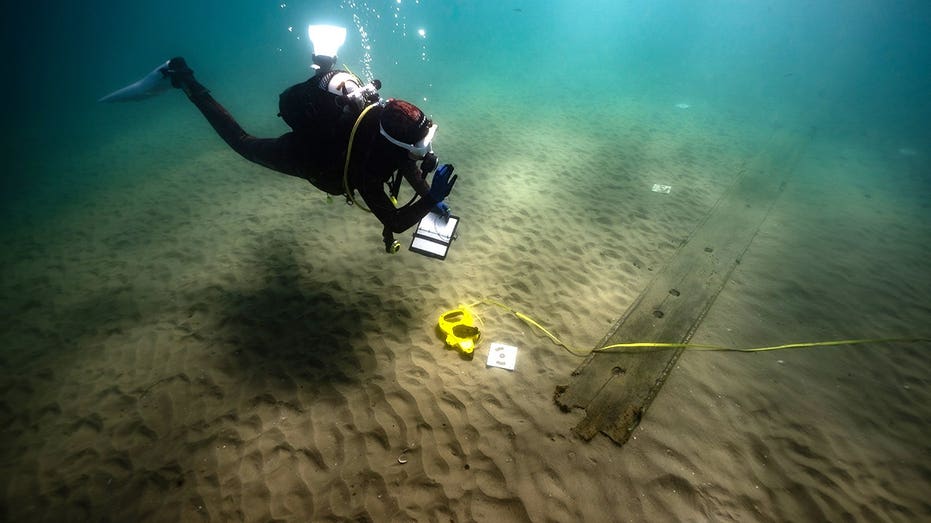
Over 100 historic shipwrecks have been uncovered at a strategic maritime gateway - and researchers warn they may be at risk of fading away.
The project, a joint venture between Spain's University of Cádiz and the University of Granada, has been underway for six years.
The vessels include 23 Roman ships, four medieval ships, and the engine and propeller of a plane from the 1930s, according to The Guardian.
The findings were "not a chance discovery," said Felipe Cerezo Andreo, a lecturer in archaeology at the University of Cádiz - and the discovery took years in the making.
The archaeologist told Fox News Digital in translated comments that his team's research has dramatically expanded what was previously known about the area.
"Before starting Project Herakles in 2019, only four underwater sites were known in the area; today we have information on more than 150 documented sites in just three years of work," he said.
"They can now be studied, protected and shared."
Archaeologists then used advanced marine scanning technology to map the seafloor and locate buried shipwrecks, including magnetometers to "detect metallic anomalies."
"The bay was a very important space in antiquity," he said. "We have evidence of settlements such as Carteia and Iulia Traducta that used these waters as their main port."
The scale of the findings suggests the area holds a continuous record of maritime history, he said.
"The bay has functioned as a funnel of global history, and this is reflected in a seabed that preserves archaeological evidence."
Most of the ships are in "critical" condition, he said - with the biggest threats coming from human activity, including port work, construction and looting.
"We have identified that a large portion of these 150 sites are at significant risk of deterioration," he said.
An invasive algae called Rugulopteryx okamurae is "drastically altering the marine environment and hindering the preservation and study of the remains," he said.
The archaeologist stressed that the shipwrecks are still a living cultural resource, and that his team is "working to make this heritage accessible to everyone."
"We want society to feel that these shipwrecks are their 'museums beneath the sea,'" he said.
"Ultimately, protecting these remains is about protecting the pages of the book that explain who we are today."
you may also like

- by foxnews
- 06 May 2026
Cruise ship passenger describes uncertainty after 3 deaths amid hantavirus probe
- by foxnews
- 06 May 2026
Underwater robotics expert reveals 'shipwreck city' hiding beneath major urban lake



travel
- by foxnews
- descember 09, 2016
Flight passenger yells, 'I want off,' calls crew 'idiots' and yanks open emergency exit door
A viral social media post captured an unruly passenger opening a plane's emergency door after hours on the tarmac on a Chicago-bound flight leaving Atlanta.
read more