- by foxnews
- 18 Sep 2026
From Plymouth to Edinburgh: a walker?s guide to six British cities
From Plymouth to Edinburgh: a walker’s guide to six British cities
- by theguardian
- 16 Nov 2021
- in travel
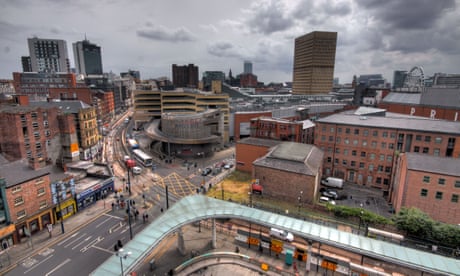
It’s a truism that so many of Britain’s high streets look alike, but often, a few steps away from the main shopping areas the particular character of a town or city can still be discerned. Manchester is ringed by canals and railways built in the 18th and 19th centuries. Liverpool slopes down to the sea via streets lined with old shipping agents’ offices and chandlers’ workshops. In Edinburgh you just have to look up and around to see history bursting out of the bedrock. We still tend to think Paris owns flâneur-ing - the art of strolling and observing urban life. But wandering our cities and towns is just as rewarding - here are six of our favourites.
The decline of a port city offloads more ghosts of lost grandeur than you’ll find in any inland metropolis. It’s impossible, almost, to imagine Liverpool as the second city of empire, the busiest port in the world, the gateway to America. The Mersey, brown-grey and sluggish, is mostly empty these days, crossed only by commuter and tourist ferries, occasional boats from Ireland and oversized cruise vessels. And yet, the river does still draw people to its edge; many of Liverpool’s most important streets end up there. The famous Three Graces and Albert Dock are almost too big to admire, unless you’re actually on the river, but, as Unesco notes, no fewer than 380 of the city’s buildings are of historic value. World heritage status might have gone but the maritime mercantile past is still everywhere.
Then, after all this urban exploration, you should take that seafront prom and hike westward along the route followed by the world’s first passenger train (the 1805-built Mumbles Railway - a horse-drawn tramway), not stopping till you get to the end of the pier at dreamy, lovely, pretty Mumbles - where Twin Town also concludes, as it happens.
There seem to me two interesting ways of tracing the steps of Lowry. One is to seek out those places where he dashed off rough sketches, places like Peel Park in Salford, Ancoats, or the streets around Pendlebury and Victoria Park close to where Lowry lived; or perhaps Crowther Street in Stockport, where he tightened the angles to get just the effect he was after. But so many of the mills, factories and houses have been razed, and it is a feat sometimes to conjure a picture of the places featured in the masterworks.
London is written to death. It has generated biographies, guidebooks, poetry books, novels, memoirs, atlases, apologias. The only way to see anything new, or anew, is to shun all these and randomise your ramble. Ironically, one of the most famous of all London poems, The Waste Land, can be a useful place to start. The last stanza of the opening section, The Burial of the Dead (which, incidentally, quotes from flâneur-in-chief Baudelaire’s Les Fleurs du mal), floats morosely around that part of the City close to where Eliot worked in Lloyds Bank’s Colonial & Foreign Department. Nicholas Hawksmoor’s Saint Mary Woolnoth, St Magnus the Martyr, London Bridge and King William Street are all key sites in the poet’s Unreal City.
Over the course of its five sections, the poem mentions Greenwich, the Isle of Dogs, River Thames, the Cannon Street hotel (the venue for the foundation congress of the Communist Party of Great Britain in 1920, bombed during the Blitz) and Metropole hotel (now the Corinthia), the Strand, Queen Victoria Street and, for those who need a suburb to make a walk feel complete, Richmond and Kew.
The poem has a ponderous, melancholy quality (listen to Eliot reading it to get the full effect) that, if piped in to ear buds as you tick off its sites, can fill even the glitziest and most garish new development with an air of gloom and discomfort. During the 2012 London Olympics build-up, many sages based in the Great Wen - to use William Cobbett’s disparaging 1820s phrase - lamented the fact London was losing its empty spaces, its liminal zones, its broken buildings, its wastelands. Poetry is a good way to impose peace and quiet, sadness and shabbiness, on the clamorous, thrusting capital.
A city that only gives up its true beauty when you turn your back on it and face the Sound, Plymouth is a conundrum worth trying to solve. Capitalism has not been kind to our conurbations and it forces on us the obligation to try to connect disparate elements in order to make sense. Here, I glance up at the 10ft-tall statue of Francis Drake with a globe that looks like one of his bowling balls - is that story, like Alfred’s burnt cakes, still told in schools? Then I look over the tops of the mid-rises to see if I can spot Drake Circus, the shopping mall. I look at the beautiful natural harbour and think of Darwin, joining the Beagle at Devonport; this was, along with Falmouth, one of the last places to board before open sea.
I walk through the post-Blitz grid city - a bargain-basement Brasilia, but a genuine attempt to create a future - and then stand before the 14-storey Crescent Point building. Plymouth is a uni-city, its undergrads bankrolling ill-conceived additions to an already chaotic-looking centre. In any case, the Point’s double towers of student flats sit empty,, a weekly fixture in the local newspapers. It’s all a bit much, but there is a flâneuring solution to Plymouth in the shape of the South West Coast Path, which skirts Plymouth on a fascinating section between Wembury Point and the Tamar Bridge, taking in Fort Bovisand, the art deco Tinside Lido and Royal William Yard - with ferry services to Cremyll in Cornwall if you want to skip the jagged edges and ins and outs of Plymouth’s various harbours and bays. Always on view is the Great Mewstone - the inspiration for Turner’s famous watercolour.
In 2017, Edinburgh came top in a survey of walkable cities carried out by campaigning charity Living Streets; it rated high for safety, access to nearby parks, pavements and the overall quality of its streets. It is, though, a city of many levels, with the Castle and Old Town on a volcanic plug that, along with Arthur’s Seat, are the best known of its alleged seven hills (so many places like to make this Roman connection). Is the breathless flâneur able to process his or her observations? You could try, by exploring Edinburgh’s many stairways, which link up the levels and create shortcuts as well as atmosphere. Plotting an urban hike by taking on News Steps (St Giles’ Street, off the Royal Mile, down 124 steps to Market St), Vennel Steps (in Grassmarket), Warriston’s Close (off Cockburn St) and Scotsman Steps (connecting North Bridge and Waverley Station) will open up unexpected views and your lungs. While taking a rest in a coffee shop or pub, spend half an hour enjoying the 1948 expressionist short Waverley Steps - free on the BFI site.
you may also like

- by foxnews
- 18 Sep 2026
US warns Americans to stay vigilant as terror risk looms at major vacation hot spot

- by foxnews
- 18 Sep 2026
Dolly Parton could soon have major airport named in her honor after unanimous vote


travel
- by foxnews
- descember 09, 2016
Lost city where Jesus performed miracles has finally been identified, expert says
Bethsaida, the home of Apostle Peter and the setting of Jesus Christ's miracles, may finally be identified after a decade of archaeology work at El-Araj.
read more