- by foxnews
- 13 Dec 2025
Mysterious bones that washed up on Jersey Shore finally identified 180 years after tragedy
Ramapo College students recently used genetic technology and historical research to solve a decades-old mystery, connecting various bones to a 1844 shipwreck and one particular victim.
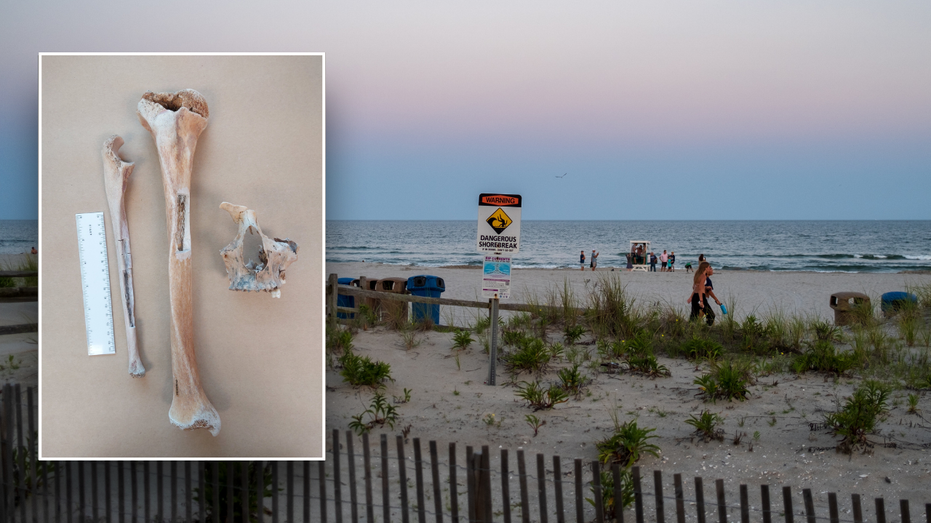
Ramapo College announced the discovery in a May 21 press release. The remains were identified as belonging to Henry Goodsell, a captain who died in an 1844 shipwreck off the coast of South Jersey's Brigantine Shoal. (See the video at the top of this article.)
The ship was carrying 60 tons of marble for Girard College, a preparatory school, when it sprung a leak and sank.
Goodsell's bones didn't wash up until over a century later, when they were found on various beaches in the Garden State.
"A skull washed ashore in Longport in 1995, and more bones were found in Margate in 1999, both in Atlantic County," Ramapo College's statement noted. "In 2013, additional remains were found in Ocean City, Cape May County."
"Scattered Man John Doe went without a name for 30 years since traditional methods of investigation could not deliver an identification."
"While there was no missing person sample on file that matched with the profiles from the bones, the bones all matched one another, so that's how [the New Jersey State Police] learned they were all connected before we began working on the case," she said.
Over the past several months, Ramapo students have gleaned various details about Goodsell's life from old newspapers.
He was 29 years old when he died, and his ancestors were among the earliest settlers in Connecticut.
"Capt. Goodsell's ancestors lived in Litchfield and Fairfield Counties in Connecticut and had all been there since the 1600s - some of the earliest European Americans," Binder said.
"He was born in Bridgeport, Connecticut, but lived in Boston from at least the late 1830s."
"The news reported that his family was left in 'very embarrassed' circumstances after the captain's death," Binder said.
"There was a fundraiser held for Capt. Goodsell's widow a year after his death," she also said. Reports were that "she was destitute."
Five or six other crew members were on the vessel, Binder noted, and all of them are believed to have died.
One was found and buried while the others were lost at sea.
"There are a handful of cases where remains more than 100 years old have been identified with IGG, but this is the oldest we have been able to find," she said.
Authorities from various New Jersey law enforcement offices were also involved in the research.
In a statement, Cape May County prosecutor Jeffrey Sutherland said the same technology is used to "bring offenders to justice."
you may also like

- by travelandtourworld
- 13 Dec 2025
Branson Shines as a Premier Christmas Destination for 2025, Offering Affordable Holiday Escapes and Stunning Decorations

- by travelandtourworld
- 13 Dec 2025
Caribbean Luxury Tourism’s Colonial Roots: The Ethics of Rebranded Plantation Resorts



travel
- by foxnews
- descember 09, 2016
Archaeologists uncover new secrets from final moments of country's bloodiest battle
Archaeologists discovered over 100 bullets at Culloden Battlefield, revealing new insights into the 1746 battle when Bonnie Prince Charlie's forces fell.
read more