- by foxnews
- 16 Mar 2026
Archaeologists uncover lost medieval city that vanished without a trace: 'True time capsule'
Archaeologists have discovered the lost medieval town of Stolzenberg in a Polish forest, uncovering more than 400 artifacts and new clues about why the town mysteriously vanished.
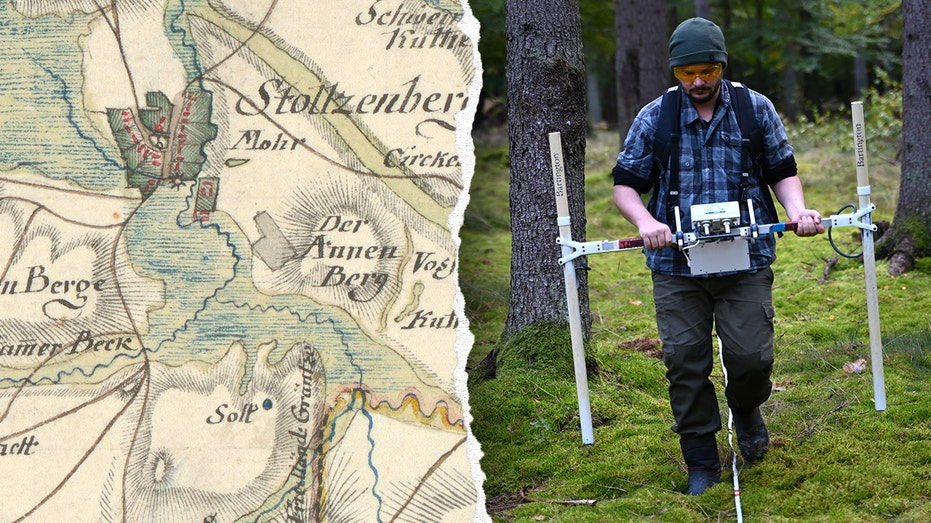
Researchers uncovered the remains of Stolzenberg, a medieval town that appears to have collapsed in the 14th or 15th century, in a forest outside the modern-day Polish village of Sławoborze.
Guided by historical sources, researchers first searched for Stolzenberg's remains in present-day Sławoborze - but they found no features confirming the medieval town's location.
In the forest, however, researchers found massive earthen ramparts and an 18-foot-deep moat, said archaeologist Marcin Krzepkowski of the Relicta Foundation.
"The results of these surveys dispelled any remaining doubts," he said.
"In the central part of the area surrounded by the moat, regular magnetic anomalies were revealed, indicating the existence of remains of buildings surrounding the rectangular market square, the city's central square," researchers noted.
"This layout is typical of medieval towns founded under German law. Traces of buildings can also be seen along the street leading to the expected city gate."
"The most valuable artifacts for us were medieval, confirming that the site was in use at the time," Krzepkowski said.
Archaeologists also found tools like knives and iron padlocks - but the most significant discovery, Krzepkowski said, was fragments of cannon grenades and lead rifle bullets.
"We linked [these artifacts] to a battle that took place in this area in 1761 between Russian and Prussian forces, [during] the Seven Years' War," he said.
"All these artifacts testify to the rich and complex past of this site, which is not limited to the late Middle Ages, when the town of Stolzenberg existed."
Experts are unsure why Stolzenberg was abandoned - and Krzepkowski said there were likely multiple factors behind its decline.
"Strange as it may seem, cities were sometimes relocated to new, more convenient locations, even as far as a dozen or so kilometers," he remarked.
"This could be due, for example, to proximity to a river and the threat of flooding, or to the search for a location that would allow for faster development. … Sometimes, a town's decline was caused by shifting trade routes or competition from other nearby towns."
Krzepkowski noted that the Relicta Foundation specializes in lost medieval cities, and in the case of Stolzenberg, it's "difficult to pinpoint the time and cause of its decline."
"We've only discovered a few artifacts that can be dated to the 16th or 17th century," said Krzepkowski. "This suggests that the town was already gone by that time. … The decline may have occurred in the 14th or 15th century."
Interestingly, archaeologists uncovered proof that some urban plots appeared undeveloped - which Krzepkowski said indicates "that the town fell at a relatively early stage, and its entire planned area was not developed."
Looking ahead, researchers will now try to confirm the location of Stolzenberg's town hall and church, as well as learn more about the city's layout.
Krzepkowski said that, though the research has taken years, his team is "still at the beginning of the journey."
"This site is a true time capsule, harboring many mysteries," he said.
you may also like

- by foxnews
- 15 Mar 2026
Cleanest cruise lines revealed after CDC surprise sanitation inspections

- by foxnews
- 14 Mar 2026
Miami Beach loosens spring break restrictions, aims to draw calmer crowds



travel
- by foxnews
- descember 09, 2016
Archaeologists uncover lost medieval city that vanished without a trace: 'True time capsule'
Archaeologists have discovered the lost medieval town of Stolzenberg in a Polish forest, uncovering more than 400 artifacts and new clues about why the town mysteriously vanished.
read more